 Sheet Music Max is a site for those who wants to access popular sheet music easily,
letting them download the sheet music for free for trial purposes.
It's completely free to download and try the listed sheet music, but you have to delete the files after 24 hours of trial.
Don't forget, if you like the piece of music you have just learned playing,
treat the artist with respect, and go buy the original sheet music.
Sheet Music Max is a site for those who wants to access popular sheet music easily,
letting them download the sheet music for free for trial purposes.
It's completely free to download and try the listed sheet music, but you have to delete the files after 24 hours of trial.
Don't forget, if you like the piece of music you have just learned playing,
treat the artist with respect, and go buy the original sheet music.
Piano Sheet Music
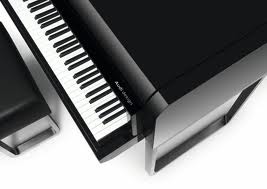 "There would be no rock and roll or rhythm and blues without Leo Fenders' contribution ... the tone is everything" Bonie Raitt
Legally Blonde
Legally Blonde is a musical based on the Amanda Brown novel and the 2001 film of the same name. The musical features a book by Heather Hach, music and lyrics by Laurence O'Keefe and Nell Benjamin, with direction and choreography by Jerry Mitchell.
After a pre-Broadway tryout in San Francisco, California, the musical opened on Broadway on April 29, 2007 to mostly positive reviews. The musical was recorded for MTV in September 2007 and aired in October 2007.
A United States first national touring production is currently in production.
Legally Blonde played its final performance on Broadway on October 19, 2008.
After a pre-Broadway tryout in San Francisco, California, the musical opened on Broadway on April 29, 2007 to mostly positive reviews. The musical was recorded for MTV in September 2007 and aired in October 2007.
A United States first national touring production is currently in production.
Legally Blonde played its final performance on Broadway on October 19, 2008.
Lieve Hugo
Julius Theodoor Hugo Uiterloo (December 13, 1934 – November 15, 1975), better known by his stage-name Lieve Hugo and his nickname Iko, was a Surinamese singer. He was one of the pioneers of the kaseko-genre; hence his other nickname King of KasekoLieve Hugo sang in a choir and played drums and percussion in a variety of bands with or without other retired boxers. In 1967 he joined Washboard Orchestra; in this band, who more or less invented kaseko, he was both a drummer and a singer. A mutated version headlined the 1970 Holland Festival at the Amsterdam Concertgebouw and got the crowd on their dancing feet. Health-reasons forced him to leave Washboard Orchestra and put down the drumsticks too.
George Benson
George Benson (born March 22, 1943) is a multi- Grammy Award winning American musician, whose production career began at the age of twenty-one as a jazz guitarist. He is also known as a pop, R&B, and scat singer. This one-time child prodigy topped the Billboard 200 in 1976 with the triple-platinum album, Breezin'. He was also a major live attraction in the UK during the 1980s. Benson uses a rest-stroke picking technique similar to that of gypsy jazz players such as Django Reinhardt.
Romeo & Juliet
William Shakespeare's Romeo and Juliet (often shortened to Romeo + Juliet) is a 1996 American romantic crime tragedy film directed, co-produced, and co-written by Baz Luhrmann, co-produced by Gabriella Martinelli, and co-written by Craig Pearce. It is an adaptation and modernization of William Shakespeare's tragedy Romeo and Juliet. The film stars Leonardo DiCaprio and Claire Danes in the title roles of two teenagers who fall in love, despite their being members of feuding families. Brian Dennehy, John Leguizamo, Pete Postlethwaite, Paul Sorvino and Diane Venora also star in supporting roles.
Traditional
traditional music
Christoph Willibald Gluck
Christoph Willibald Gluck, German composer. Due to his family being a forester, he spent his childhood in various cities and towns. In 1727, he began to take his first music lessons in Komotau.
Bach
Johann Sebastian Bach (31 March 1685 – 28 July 1750) was a German composer and organist whose sacred and secular works for choir, orchestra, and solo instruments drew together the strands of the Baroque period and brought it to its ultimate maturity. Although he introduced no new forms, he enriched the prevailing German style with a robust contrapuntal technique, an unrivalled control of harmonic and motivic organisation in composition for diverse musical forces, and the adaptation of rhythms and textures from abroad, particularly Italy and France.
Revered for their intellectual depth and technical and artistic beauty, Bach's works include the Brandenburg concertos; the Goldberg Variations; the English Suites, French Suites, Partitas, and Well-Tempered Clavier; the Mass in B Minor; the St. Matthew Passion; the St. John Passion; The Musical Offering; The Art of Fugue; the Sonatas and Partitas for violin solo; the Cello Suites; more than 200 surviving cantatas; and a similar number of organ works, including the celebrated Toccata and Fugue in D Minor.
While Bach's fame as an organist was great during his lifetime, he was not particularly well-known as a composer. His adherence to Baroque forms and contrapuntal style was considered "old-fashioned" by his contemporaries, especially late in his career when the musical fashion tended towards Rococo and later Classical styles. A revival of interest and performances of his music began early in the 19th century, and he is now widely considered to be one of the greatest composers in the Western tradition.
Revered for their intellectual depth and technical and artistic beauty, Bach's works include the Brandenburg concertos; the Goldberg Variations; the English Suites, French Suites, Partitas, and Well-Tempered Clavier; the Mass in B Minor; the St. Matthew Passion; the St. John Passion; The Musical Offering; The Art of Fugue; the Sonatas and Partitas for violin solo; the Cello Suites; more than 200 surviving cantatas; and a similar number of organ works, including the celebrated Toccata and Fugue in D Minor.
While Bach's fame as an organist was great during his lifetime, he was not particularly well-known as a composer. His adherence to Baroque forms and contrapuntal style was considered "old-fashioned" by his contemporaries, especially late in his career when the musical fashion tended towards Rococo and later Classical styles. A revival of interest and performances of his music began early in the 19th century, and he is now widely considered to be one of the greatest composers in the Western tradition.
Jordin Sparks
Jordin Brianna Sparks (born December 22, 1989) is an American R&B and pop singer from Glendale, Arizona who rose to fame as the winner of the sixth season of American Idol. Sparks won when she was 17 years old, making her the youngest winner. She followed her American Idol victory with the release of her self-titled debut album in 2007, which has gone Platinum and has sold over 2 million copies worldwide. Sparks' second single "No Air", which features Chris Brown, is the song with the most paid downloads by any American Idol contestant, selling about 4 million digital copies worldwide. Due to the success of her debut album and its four top 20 singles, she has won an American Music Award in 2008 and received her first Grammy nomination in 2009.
Sparks' sophomore album Battlefield was released in July 2009 worldwide and debuted at #7 in the United States, three spots higher than her first album. The album's lead single was also titled "Battlefield" and peaked in the top 10 on the Billboard Hot 100 and has sold more than a million copies thus far. Sparks has sold about 9 million singles worldwide to date. Sparks' first five singles all peaked in the top 20 on the US Billboard Hot 100, three of them peaking in the top 10. Her second single off of her sophomore album, "S.O.S. (Let the Music Play)", was her first song to top the U.S. Billboard Hot Dance Club Play making it her first U.S. number one single.
Sparks' sophomore album Battlefield was released in July 2009 worldwide and debuted at #7 in the United States, three spots higher than her first album. The album's lead single was also titled "Battlefield" and peaked in the top 10 on the Billboard Hot 100 and has sold more than a million copies thus far. Sparks has sold about 9 million singles worldwide to date. Sparks' first five singles all peaked in the top 20 on the US Billboard Hot 100, three of them peaking in the top 10. Her second single off of her sophomore album, "S.O.S. (Let the Music Play)", was her first song to top the U.S. Billboard Hot Dance Club Play making it her first U.S. number one single.
Francisco Manuel da Silva
Francisco Manuel da Silva (21 February 1795 – 18 December 1865) was a songwriter and music professor. He was born and died in Rio de Janeiro. He had great prominence in the musical life of Rio de Janeiro in the period between the death of José Maurício Nunes Garcia and Antônio Carlos Gomes. He was a singer of Capela Real since 1809, and later a cello player. He was one of the founders of Imperial Academia de Música e Ópera Nacional (National Imperial Music and Opera Academy), of Sociedade Beneficência Musical e Conservatório Imperial de Música, which became Instituto Nacional de Música (Nacional Music Institute) and is called Escola de Música da Universidade Federal do Rio de Janeiro (Rio de Janeiro University Music School).
Wicked
Wicked is a musical with songs and lyrics by Stephen Schwartz and a book by Winnie Holzman. The story is based on the best-selling novel Wicked: The Life and Times of the Wicked Witch of the West by Gregory Maguire, a parallel novel of L. Frank Baum's classic story The Wonderful Wizard of Oz from the perspective of the witches of the Land of Oz.
Wicked tells the story of Elphaba, the future Wicked Witch of the West and her relationship with Glinda, the Good Witch of the North. Their friendship struggles through their opposing personalities and viewpoints, rivalry over the same love-interest, their reactions to the Wizard's corrupt government, and, ultimately, Elphaba's public fall from grace. The plot is set mostly before Dorothy's arrival from Kansas, and includes several references to well-known scenes and dialogue in the 1939 film The Wizard of Oz.
The musical debuted on Broadway on October 30, 2003. It is produced by Universal Pictures and directed by Joe Mantello, with musical staging by Wayne Cilento. Its original stars were Idina Menzel as Elphaba, Kristin Chenoweth as Glinda, and Joel Grey as the Wizard. Although the production received mixed reviews and was panned by The New York Times, it has proved to be a favorite among patrons. The Broadway production's success spawned productions in Chicago, Los Angeles, London's West End, Tokyo, Melbourne, and Stuttgart, along with two North American tours that have visited over 30 cities in Canada and the United States.
The score of Wicked is heavily thematic, bearing in some senses more resemblance to a film score than a musical's score. While many musicals' scores develop new motifs and melodies for each song with little overlap, Schwartz integrated a handful of leitmotifs throughout the production. A cast recording of the original Broadway production was released on December 16, 2003, by Universal Music. All of the songs featured on stage are present on the recording with the exception of "The Wizard And I (Reprise)" and "The Wicked Witch of the East". The short reprise of "No One Mourns The Wicked" that opens Act II is attached to the beginning of "Thank Goodness". The music was arranged by Stephen Oremus, who was also the conductor and director, and James Lynn Abbott, with orchestrations by William David Brohn. The recording received the Grammy Award for Best Musical Show Album in 2005 and was certified platinum by the RIAA on November 30, 2006.
Wicked tells the story of Elphaba, the future Wicked Witch of the West and her relationship with Glinda, the Good Witch of the North. Their friendship struggles through their opposing personalities and viewpoints, rivalry over the same love-interest, their reactions to the Wizard's corrupt government, and, ultimately, Elphaba's public fall from grace. The plot is set mostly before Dorothy's arrival from Kansas, and includes several references to well-known scenes and dialogue in the 1939 film The Wizard of Oz.
The musical debuted on Broadway on October 30, 2003. It is produced by Universal Pictures and directed by Joe Mantello, with musical staging by Wayne Cilento. Its original stars were Idina Menzel as Elphaba, Kristin Chenoweth as Glinda, and Joel Grey as the Wizard. Although the production received mixed reviews and was panned by The New York Times, it has proved to be a favorite among patrons. The Broadway production's success spawned productions in Chicago, Los Angeles, London's West End, Tokyo, Melbourne, and Stuttgart, along with two North American tours that have visited over 30 cities in Canada and the United States.
The score of Wicked is heavily thematic, bearing in some senses more resemblance to a film score than a musical's score. While many musicals' scores develop new motifs and melodies for each song with little overlap, Schwartz integrated a handful of leitmotifs throughout the production. A cast recording of the original Broadway production was released on December 16, 2003, by Universal Music. All of the songs featured on stage are present on the recording with the exception of "The Wizard And I (Reprise)" and "The Wicked Witch of the East". The short reprise of "No One Mourns The Wicked" that opens Act II is attached to the beginning of "Thank Goodness". The music was arranged by Stephen Oremus, who was also the conductor and director, and James Lynn Abbott, with orchestrations by William David Brohn. The recording received the Grammy Award for Best Musical Show Album in 2005 and was certified platinum by the RIAA on November 30, 2006.
Zequinha de Abreu
José Gomes de Abreu, better known as Zequinha de Abreu (September 19, 1880 — January 22, 1935), was a Brazilian musician and composer who in 1917 wrote the famous choro tune "Tico-Tico no Fubá" (whose original title was "Tico-Tico no Farelo"). Other well-known tunes he wrote were "Branca" and "Tardes de Lindóia."
Gaspar Cassado
Gaspar Cassadó i Moreu was a Spanish cellist and composer of the early 20th century. He was born in Barcelona to a church musician father, Joaquim Cassadó, and began taking cello lessons at age seven
Edward German
Sir Edward German was an English musician and composer of Welsh descent, best remembered for his extensive output of incidental music for the stage and as a successor to Arthur Sullivan in the field of English comic opera. Some of his light operas, especially Merrie England, are still performed.
Ragnarok Online
Ragnarok Online (Korean: 라그나로크 온라인, alternatively subtitled The Final Destiny of the Gods), often referred to as RO, is a massively multiplayer online role-playing game or MMORPG created by GRAVITY Co., Ltd. based on the manhwa Ragnarok by Lee Myung-jin. It was first released in South Korea on 31 August 2002 for Microsoft Windows and has since been released in many other locales around the world. Its style and settings have been influenced by a wide variety of international cultures. The game has spawned an animated series, Ragnarok the Animation, and a sequel game, Ragnarok Online 2: Legend of The Second, is in development. Player characters exist in a world with a player environment that gradually changes with the passage of time. Major changes in the features and history of the world take place as episodes in the RO timeline. Player characters interact in a 3D environment but are represented by 2D character sprites for front, back, side and diagonal facings.
Lucio Battisti
Lucio Battisti was an influential Italian singer-songwriter and composer. He is widely recognized for songs that defined the late 1960s and 1970s era of Italian songwriting
Guiseppe Verdi
Giuseppe Fortunino Francesco Verdi (Italian pronunciation: ; 10 October 1813 – 27 January 1901) was an Italian Romantic composer, mainly of opera. He was one of the most influential composers of the 19th century. His works are frequently performed in opera houses throughout the world and, transcending the boundaries of the genre, some of his themes have long since taken root in popular culture - such as "La donna è mobile" from Rigoletto, "Va, pensiero" (The Chorus of the Hebrew Slaves) from Nabucco, "Libiamo ne' lieti calici" (The Drinking Song) from La traviata and the "Grand March" from Aida. Although his work was sometimes criticized for using a generally diatonic rather than a chromatic musical idiom and having a tendency toward melodrama, Verdi’s masterworks dominate the standard repertoire a century and a half after their composition.
Verdi's predecessors who influenced his music were Rossini, Bellini, Giacomo Meyerbeer and, most notably, Gaetano Donizetti and Saverio Mercadante. With the exception of Otello and Aida, he was free of Wagner's influence. Although respectful of Gounod, Verdi was careful not to learn anything from the Frenchman whom many of Verdi's contemporaries regarded as the greatest living composer. Some strains in Aida suggest at least a superficial familiarity with the works of the Russian composer Mikhail Glinka, whom Franz Liszt, after his tour of the Russian Empire as a pianist, popularized in Western Europe.
Throughout his career, Verdi rarely utilised the high C in his tenor arias, citing the fact that the opportunity to sing that particular note in front of an audience distracts the performer before and after the note appears. However, he did provide high Cs to Duprez in Jérusalem and to Tamberlick in the original version of La forza del destino. The high C often heard in the aria Di quella pira does not appear in Verdi's score.
Verdi's predecessors who influenced his music were Rossini, Bellini, Giacomo Meyerbeer and, most notably, Gaetano Donizetti and Saverio Mercadante. With the exception of Otello and Aida, he was free of Wagner's influence. Although respectful of Gounod, Verdi was careful not to learn anything from the Frenchman whom many of Verdi's contemporaries regarded as the greatest living composer. Some strains in Aida suggest at least a superficial familiarity with the works of the Russian composer Mikhail Glinka, whom Franz Liszt, after his tour of the Russian Empire as a pianist, popularized in Western Europe.
Throughout his career, Verdi rarely utilised the high C in his tenor arias, citing the fact that the opportunity to sing that particular note in front of an audience distracts the performer before and after the note appears. However, he did provide high Cs to Duprez in Jérusalem and to Tamberlick in the original version of La forza del destino. The high C often heard in the aria Di quella pira does not appear in Verdi's score.
Radiohead
Radiohead are an English alternative rock band from Oxfordshire. The band is composed of Thom Yorke (lead vocals, rhythm guitar, piano, electronics), Jonny Greenwood (lead guitar, other instruments), Ed O'Brien (guitar, backing vocals), Colin Greenwood (bass guitar, synthesisers) and Phil Selway (drums, percussion). Since 1993, Radiohead have released seven studio albums. The band have sold over 25 million albums as of 2007.
Radiohead released their first single, "Creep", in 1992. Their debut album, Pablo Honey, followed in 1993. "Creep" was initially unsuccessful, but the song became a worldwide hit when reissued a year later, and the band were almost branded as one hit wonders. Radiohead's popularity in the United Kingdom increased with the release of their second album, The Bends (1995). The band's textured guitar atmospheres and Yorke's falsetto singing were warmly received by critics and fans. Radiohead's third album, OK Computer (1997), propelled the band to greater fame worldwide. Featuring an expansive sound and themes of alienation from the modern world, OK Computer has often been acclaimed as a landmark record of the 1990s.
The release of Kid A (2000) and Amnesiac (2001) saw Radiohead reach the peak of their popularity, although the albums divided critical opinion. This period marked a change in Radiohead's musical style, with their incorporation of avant-garde electronic music, Krautrock and jazz influences. Hail to the Thief (2003), which mixed guitar-driven rock with electronics and contemporary lyrics, was the band's final album for their record label, EMI. Radiohead's seventh album, In Rainbows (2007), was first released independently as a digital download for which customers selected their own price, later meeting with critical and chart success.
Radiohead released their first single, "Creep", in 1992. Their debut album, Pablo Honey, followed in 1993. "Creep" was initially unsuccessful, but the song became a worldwide hit when reissued a year later, and the band were almost branded as one hit wonders. Radiohead's popularity in the United Kingdom increased with the release of their second album, The Bends (1995). The band's textured guitar atmospheres and Yorke's falsetto singing were warmly received by critics and fans. Radiohead's third album, OK Computer (1997), propelled the band to greater fame worldwide. Featuring an expansive sound and themes of alienation from the modern world, OK Computer has often been acclaimed as a landmark record of the 1990s.
The release of Kid A (2000) and Amnesiac (2001) saw Radiohead reach the peak of their popularity, although the albums divided critical opinion. This period marked a change in Radiohead's musical style, with their incorporation of avant-garde electronic music, Krautrock and jazz influences. Hail to the Thief (2003), which mixed guitar-driven rock with electronics and contemporary lyrics, was the band's final album for their record label, EMI. Radiohead's seventh album, In Rainbows (2007), was first released independently as a digital download for which customers selected their own price, later meeting with critical and chart success.
Aretha Franklin
Aretha Louise Franklin (born March 25, 1942) is an American singer, songwriter and pianist self-named and commonly referred to as "The Queen of Soul". Although renowned for her soul recordings, Franklin is also adept at jazz, rock, blues, pop, R&B and gospel. In 2008, the American music magazine Rolling Stone ranked Franklin #1 on its list of The Greatest Singers of All Time.
Franklin is one of the most honored artists by the Grammy Awards, with 20 Grammys to date, which include the Living Legend Grammy and the Lifetime Achievement Grammy. She has scored a total of 20 #1 singles on the Billboard R&B Singles Chart, two of which also became #1 hits on the Billboard Hot 100: "Respect" (1967) and "I Knew You Were Waiting (For Me)" (1987), a duet with George Michael. Since 1961, Franklin has scored a total of 45 "Top 40" hits on the Billboard Hot 100 chart.
In 1987, Franklin became the first female artist to be entered into the Rock and Roll Hall of Fame.
Franklin was the featured singer at the 2009 Presidential inauguration ceremony for Barack Obama.
Franklin is one of the most honored artists by the Grammy Awards, with 20 Grammys to date, which include the Living Legend Grammy and the Lifetime Achievement Grammy. She has scored a total of 20 #1 singles on the Billboard R&B Singles Chart, two of which also became #1 hits on the Billboard Hot 100: "Respect" (1967) and "I Knew You Were Waiting (For Me)" (1987), a duet with George Michael. Since 1961, Franklin has scored a total of 45 "Top 40" hits on the Billboard Hot 100 chart.
In 1987, Franklin became the first female artist to be entered into the Rock and Roll Hall of Fame.
Franklin was the featured singer at the 2009 Presidential inauguration ceremony for Barack Obama.
Owl City
Owl City is an American synthpop musical project by Adam Young. Young started out making music in his parents' basement in Owatonna, Minnesota which he claims is a result of his insomnia.
Young's influences are disco and European electronic music. After two independent albums, Owl City gained mainstream popularity from the 2009 major label debut album Ocean Eyes, which spawned the U.S. Billboard Hot 100 #1 hit single "Fireflies". "Fireflies" topped the US and Canadian charts and became the most-downloaded song on iTunes in the US, and the album Ocean Eyes reached the top ten on the US album charts and topped the US electronic charts. Ocean Eyes also reached Amazon MP3's top 10 most downloaded album list. By December 2009, it was certified Gold in the United States.
Young's influences are disco and European electronic music. After two independent albums, Owl City gained mainstream popularity from the 2009 major label debut album Ocean Eyes, which spawned the U.S. Billboard Hot 100 #1 hit single "Fireflies". "Fireflies" topped the US and Canadian charts and became the most-downloaded song on iTunes in the US, and the album Ocean Eyes reached the top ten on the US album charts and topped the US electronic charts. Ocean Eyes also reached Amazon MP3's top 10 most downloaded album list. By December 2009, it was certified Gold in the United States.
Moritz Moszkowski
Moritz (Maurice) Moszkowski (23 August 1854 – 4 March 1925) was a German composer, pianist, and teacher of Polish descent. Ignacy Paderewski said, "After Chopin, Moszkowski best understands how to write for the piano". Although little known today, Moszkowski was well-respected and popular during the late nineteenth century.
His music is brilliant, but has also been described as "devoid of the masculine and the feminine". He wrote over two hundred small-scale piano pieces, which brought him much popularity – notably his set of Spanish Dances, Op. 12, for piano duet (later arranged for solo piano, and for orchestra ). His early Serenade, Op. 15, was world-famous and appeared in many guises, including the song Liebe, kleine Nachtigall. Today he is probably best known for his fifteen Études de Virtuosité, Op. 72, which have been performed by virtuoso pianists such as Vladimir Horowitz and Marc-André Hamelin. Surprisingly, their first complete recording was not until 1970 (by Ilana Vered). Many of his small but brilliant piano pieces, such as Étincelles (Sparks), are used as encore performances at the end of classical concerts.
He also wrote larger scale works including the Piano Concerto in E major, Op. 59 (1898), the Violin Concerto in C major, Op. 30, three orchestral suites (Opp. 39, 47, 79), and a symphonic poem Jeanne d'Arc, Op. 19.
He wrote the opera Boabdil der letzte Maurenkönig, Op. 49, on the historical theme of the capture of Granada. It was premiered at the Berlin Court Opera on 21 April 1892, and appeared in Prague and New York the following year. It did not stay in the repertoire, but its ballet music was very popular for a number of years. He wrote a three-act ballet Laurin in 1896.
His music is brilliant, but has also been described as "devoid of the masculine and the feminine". He wrote over two hundred small-scale piano pieces, which brought him much popularity – notably his set of Spanish Dances, Op. 12, for piano duet (later arranged for solo piano, and for orchestra ). His early Serenade, Op. 15, was world-famous and appeared in many guises, including the song Liebe, kleine Nachtigall. Today he is probably best known for his fifteen Études de Virtuosité, Op. 72, which have been performed by virtuoso pianists such as Vladimir Horowitz and Marc-André Hamelin. Surprisingly, their first complete recording was not until 1970 (by Ilana Vered). Many of his small but brilliant piano pieces, such as Étincelles (Sparks), are used as encore performances at the end of classical concerts.
He also wrote larger scale works including the Piano Concerto in E major, Op. 59 (1898), the Violin Concerto in C major, Op. 30, three orchestral suites (Opp. 39, 47, 79), and a symphonic poem Jeanne d'Arc, Op. 19.
He wrote the opera Boabdil der letzte Maurenkönig, Op. 49, on the historical theme of the capture of Granada. It was premiered at the Berlin Court Opera on 21 April 1892, and appeared in Prague and New York the following year. It did not stay in the repertoire, but its ballet music was very popular for a number of years. He wrote a three-act ballet Laurin in 1896.
Arrigo Boito
Arrigo Boito (Italian: ; 24 February 1842 – 10 June 1918) (whose original name was Enrico Giuseppe Giovanni Boito and who wrote essays under the anagrammatic pseudonym of Tobia Gorrio) was an Italian poet, journalist, novelist, librettist and composer, best known today for his libretti, especially those for Giuseppe Verdi's last two monumental operas Otello and Falstaff (not to mention Amilcare Ponchielli's operatic masterpiece La Gioconda) and his own opera Mefistofele. Along with Emilio Praga and his own brother Camillo Boito, he is regarded as one of the prominent representatives of the Scapigliatura artistic movement.
Elisabeth Musical
Elisabeth Musical Musical artist Available on Mama, wo bist du? Elisabeth, mach auf mein Engel Der Schleier fällt.
Company
Company is a musical with a book by George Furth and music and lyrics by Stephen Sondheim.
Originally entitled Threes, its plot revolves around Bobby (a single man unable to commit fully to a steady relationship, let alone marriage), the five married couples who are his best friends, and his three girlfriends. Unlike most book musicals, which follow a clearly delineated plot, Company is a concept musical composed of short vignettes, presented in no particular chronological order, linked by a celebration for Bobby's 35th birthday.
Company was among the first musicals to deal with adult problems through its music. As Sondheim put it, "they are middle-class people with middle class-problems." It is also one of the first musicals where the songs commented on the characters in the play instead of furthering the plot, a device which became a Sondheim standard.
Originally entitled Threes, its plot revolves around Bobby (a single man unable to commit fully to a steady relationship, let alone marriage), the five married couples who are his best friends, and his three girlfriends. Unlike most book musicals, which follow a clearly delineated plot, Company is a concept musical composed of short vignettes, presented in no particular chronological order, linked by a celebration for Bobby's 35th birthday.
Company was among the first musicals to deal with adult problems through its music. As Sondheim put it, "they are middle-class people with middle class-problems." It is also one of the first musicals where the songs commented on the characters in the play instead of furthering the plot, a device which became a Sondheim standard.
Carole King
Carole King (born February 9, 1942) is an American singer, songwriter, and pianist. She was most active as a singer during the first half of the 1970s, though she was a successful songwriter for considerably longer both before and after this period.
King has won four Grammy Awards and has been inducted into both the Songwriters Hall of Fame and the Rock and Roll Hall of Fame for her songwriting, along with long-time partner Gerry Goffin.
King has won four Grammy Awards and has been inducted into both the Songwriters Hall of Fame and the Rock and Roll Hall of Fame for her songwriting, along with long-time partner Gerry Goffin.
Alicia Keys
Alicia J. Augello-Cook (born January 25, 1981), and has won numerous awards, including eleven Grammy Awards, seventeen Billboard Music Awards, three American Music Awards.
Her debut album Songs in A Minor was a worldwide success, selling nearly 11 millions albums, and received five Grammy Awards in 2002, with Alicia winning Best New Artist and also Song of the Year for "Fallin'".
Her debut album Songs in A Minor was a worldwide success, selling nearly 11 millions albums, and received five Grammy Awards in 2002, with Alicia winning Best New Artist and also Song of the Year for "Fallin'".
Bill Evans
William John Evans, known as Bill Evans (August 16, 1929 – September 15, 1980) was an American jazz pianist. His use of impressionist harmony, inventive interpretation of traditional jazz repertoire, and trademark rhythmically independent, "singing" melodic lines influenced a generation of pianists, including Chick Corea, Herbie Hancock, John Taylor, Steve Kuhn, Don Friedman, Denny Zeitlin, Bobo Stenson and Keith Jarrett, as well as guitarists Lenny Breau and Pat Metheny. The music of Bill Evans continues to inspire younger pianists like Marcin Wasilewski, Fred Hersch, Ray Reach, Bill Charlap, Lyle Mays, Eliane Elias and arguably Brad Mehldau, early in his career.
Evans is an inductee of the Down Beat Jazz Hall of Fame.
Evans is an inductee of the Down Beat Jazz Hall of Fame.
Once on This Island
Once on This Island is a one-act musical with a book and lyrics by Lynn Ahrens and music by Stephen Flaherty. Based on the novel My Love, My Love by Rosa Guy, the musical is a retelling of Hans Christian Andersen's The Little Mermaid set in the French Antilles in the Caribbean Sea. The show also includes elements of the Romeo and Juliet story.
Originally staged at off-Broadway's Playwrights Horizons, the Broadway production, directed and choreographed by Graciela Daniele and starring LaChanze as Ti Moune, opened on October 18, 1990 at the Booth Theatre, where it ran for 469 performances. In 2002, the original cast was reunited with special guest Lillias White to perform the show for Broadway Cares/Equity Fights AIDS and the Cantor Fitzgerald Relief Fund.
Originally staged at off-Broadway's Playwrights Horizons, the Broadway production, directed and choreographed by Graciela Daniele and starring LaChanze as Ti Moune, opened on October 18, 1990 at the Booth Theatre, where it ran for 469 performances. In 2002, the original cast was reunited with special guest Lillias White to perform the show for Broadway Cares/Equity Fights AIDS and the Cantor Fitzgerald Relief Fund.
Counting Crows
Counting Crows is a rock band originating from Berkeley, California. The group gained popularity in 1994 following the release of its debut album August and Everything After, which featured the hit single "Mr. Jones". The band's influences include Van Morrison, R.E.M., Nirvana, Bob Dylan, and The Band. They received a 2004 Academy Award nomination for the song "Accidentally in Love".
J. S. Bach
Johann Sebastian Bach (21 March 1685, O.S.31 March 1685, N.S. – 28 July 1750, N.S.) was a German composer, organist, harpsichordist, violist, and violinist whose sacred and secular works for choir, orchestra, and solo instruments drew together the strands of the Baroque period and brought it to its ultimate maturity. Although he did not introduce new forms, he enriched the prevailing German style with a robust contrapuntal technique, an unrivalled control of harmonic and motivic organisation, and the adaptation of rhythms, forms and textures from abroad, particularly from Italy and France.
Revered for their intellectual depth, technical command and artistic beauty, Bach's works include the Brandenburg Concertos, the Goldberg Variations, the Partitas, The Well-Tempered Clavier, the Mass in B minor, the St Matthew Passion, the St John Passion, the Magnificat, A Musical Offering, The Art of Fugue, the English and French Suites, the Sonatas and Partitas for solo violin, the Cello Suites, more than 200 surviving cantatas, and a similar number of organ works, including the famous Toccata and Fugue in D minor and Passacaglia and Fugue in C minor, as well as the Great Eighteen Chorale Preludes and Organ Mass.
Bach's abilities as an organist were highly respected throughout Europe during his lifetime, although he was not widely recognised as a great composer until a revival of interest and performances of his music in the first half of the 19th century. He is now generally regarded as one of the main composers of the Baroque style, and as one of the greatest composers of all time.
Revered for their intellectual depth, technical command and artistic beauty, Bach's works include the Brandenburg Concertos, the Goldberg Variations, the Partitas, The Well-Tempered Clavier, the Mass in B minor, the St Matthew Passion, the St John Passion, the Magnificat, A Musical Offering, The Art of Fugue, the English and French Suites, the Sonatas and Partitas for solo violin, the Cello Suites, more than 200 surviving cantatas, and a similar number of organ works, including the famous Toccata and Fugue in D minor and Passacaglia and Fugue in C minor, as well as the Great Eighteen Chorale Preludes and Organ Mass.
Bach's abilities as an organist were highly respected throughout Europe during his lifetime, although he was not widely recognised as a great composer until a revival of interest and performances of his music in the first half of the 19th century. He is now generally regarded as one of the main composers of the Baroque style, and as one of the greatest composers of all time.
Alan Silvestri
Alan Anthony Silvestri (born March 26, 1950) is an Academy Award-nominated American film score composer and conductor.
estri is best known for his collaborations with director Robert Zemeckis, having scored Romancing the Stone (1984), the Back to the Future trilogy (1985, 1989, 1990), Who Framed Roger Rabbit (1988), Death Becomes Her (1992), Forrest Gump (1994), Contact (1997), Cast Away (2000), The Polar Express (2004) , Beowulf (2007) and Disney's A Christmas Carol (2009).
Silvestri is also known for his work on Predator (1987) and Predator 2 (1990), both of which are considered preeminent examples of action/sci-fi film scores. He has also begun a collaboration with director Stephen Sommers, scoring the films The Mummy Returns in 2001, Van Helsing in 2004 and G.I. Joe: The Rise of Cobra in 2009.
Silvestri also composed music for television, including for the series Starsky & Hutch, CHiPs , Manimal and HBO's Tales from the Crypt.
Silvestri was 21 years old when he started his film/televsion composing career.
His early style is marked by a strong use of the "octatonic scale," as well as an eclectic use of different notes and instruments.
It was thought that Silvestri was allegedly inspired by the works of Barry DeVorzon, Perry Botkin, Jr., Lalo Schifrin, Jerry Fielding, Jerry Goldsmith and John Williams.
estri is best known for his collaborations with director Robert Zemeckis, having scored Romancing the Stone (1984), the Back to the Future trilogy (1985, 1989, 1990), Who Framed Roger Rabbit (1988), Death Becomes Her (1992), Forrest Gump (1994), Contact (1997), Cast Away (2000), The Polar Express (2004) , Beowulf (2007) and Disney's A Christmas Carol (2009).
Silvestri is also known for his work on Predator (1987) and Predator 2 (1990), both of which are considered preeminent examples of action/sci-fi film scores. He has also begun a collaboration with director Stephen Sommers, scoring the films The Mummy Returns in 2001, Van Helsing in 2004 and G.I. Joe: The Rise of Cobra in 2009.
Silvestri also composed music for television, including for the series Starsky & Hutch, CHiPs , Manimal and HBO's Tales from the Crypt.
Silvestri was 21 years old when he started his film/televsion composing career.
His early style is marked by a strong use of the "octatonic scale," as well as an eclectic use of different notes and instruments.
It was thought that Silvestri was allegedly inspired by the works of Barry DeVorzon, Perry Botkin, Jr., Lalo Schifrin, Jerry Fielding, Jerry Goldsmith and John Williams.
Puccini
Giacomo Antonio Domenico Michele Secondo Maria Puccini (December 22, 1858 – November 29, 1924) was an Italian composer whose operas, including La Bohème, Tosca, and Madama Butterfly, are among the most frequently performed in the standard repertoire. Some of his arias, such as "O Mio Babbino Caro" from Gianni Schicchi, "Che gelida manina" from La Bohème, and "Nessun Dorma" from Turandot, have become part of popular culture.
The subject of Puccini's style is one that has been long avoided by musicologists; this avoidance can perhaps be attributed to the perception that his work, with its emphasis on melody and evident popular appeal, lacked "seriousness" (a similar prejudice beset Rachmaninoff during his lifetime). Despite the place Puccini clearly occupies in the popular tradition of Verdi, his style of orchestration also shows the strong influence of Wagner, matching specific orchestral configurations and timbres to different dramatic moments. His operas contain an unparalleled manipulation of orchestral colors, with the orchestra often creating the scene’s atmosphere.
The structures of Puccini's works are also noteworthy. While it is to an extent possible to divide his operas into arias or numbers (like Verdi's), his scores generally present a very strong sense of continuous flow and connectivity, perhaps another sign of Wagner’s influence. Like Wagner, Puccini used leitmotifs to connote characters (or combinations of characters). This is apparent in Tosca, where the three chords which signal the beginning of the opera are used throughout to announce Scarpia. Several motifs are also linked to Mimi and the Bohemians in La Bohème and to Cio-Cio-San's eventual suicide in Butterfly. Unlike Wagner, though, Puccini's motifs are static: where Wagner's motifs develop into more complicated figures as the characters develop, Puccini's remain more or less identical throughout the opera (in this respect anticipating the themes of modern musical theatre).
The subject of Puccini's style is one that has been long avoided by musicologists; this avoidance can perhaps be attributed to the perception that his work, with its emphasis on melody and evident popular appeal, lacked "seriousness" (a similar prejudice beset Rachmaninoff during his lifetime). Despite the place Puccini clearly occupies in the popular tradition of Verdi, his style of orchestration also shows the strong influence of Wagner, matching specific orchestral configurations and timbres to different dramatic moments. His operas contain an unparalleled manipulation of orchestral colors, with the orchestra often creating the scene’s atmosphere.
The structures of Puccini's works are also noteworthy. While it is to an extent possible to divide his operas into arias or numbers (like Verdi's), his scores generally present a very strong sense of continuous flow and connectivity, perhaps another sign of Wagner’s influence. Like Wagner, Puccini used leitmotifs to connote characters (or combinations of characters). This is apparent in Tosca, where the three chords which signal the beginning of the opera are used throughout to announce Scarpia. Several motifs are also linked to Mimi and the Bohemians in La Bohème and to Cio-Cio-San's eventual suicide in Butterfly. Unlike Wagner, though, Puccini's motifs are static: where Wagner's motifs develop into more complicated figures as the characters develop, Puccini's remain more or less identical throughout the opera (in this respect anticipating the themes of modern musical theatre).
Paolo Ugoletti
Paolo Ugoletti (born 7 June 1956) is an Italian composer. Paolo Ugoletti was born in Brescia on 7 June 1956. He studied composition since 1973 at the Conservatory of Brescia with Giancarlo Facchinetti and Giovanni Ugolini and then at the Conservatory "Giuseppe Verdi" in Milan with Giacomo Manzoni. From 1977 to 1979 he attended Franco Donatoni's composition course at the Accademia Musicale Chigiana in Siena where he obtains the diploma of merit.
Muzio Clementi
Muzio Filippo Vincenzo Francesco Saverio Clementi (23 January 1752 – 10 March 1832) was an Italian composer, virtuoso pianist, pedagogue, conductor, music publisher, editor, and piano manufacturer, who was mostly active in England.
Encouraged to study music by his father, he was sponsored as a young composer by Sir Peter Beckford who took him to England to advance his studies. Later, he toured Europe numerous times from his long-standing base in London. It was on one of these occasions, in 1781, that he engaged in a piano competition with Wolfgang Amadeus Mozart.
Encouraged to study music by his father, he was sponsored as a young composer by Sir Peter Beckford who took him to England to advance his studies. Later, he toured Europe numerous times from his long-standing base in London. It was on one of these occasions, in 1781, that he engaged in a piano competition with Wolfgang Amadeus Mozart.
Ludwig van Beethoven
Ludwig van Beethoven (/ˈlʊdvɪɡ væn ˈbeɪt(h)oʊvən/ (About this soundlisten); German: (About this soundlisten); baptised 17 December 1770 – 26 March 1827) was a German composer and pianist. A crucial figure in the transition between the classical and romantic eras in classical music, he remains one of the most recognized and influential musicians of this period, and is considered to be one of the greatest composers of all time.
Beethoven was born in Bonn, the capital of the Electorate of Cologne, and part of the Holy Roman Empire. He displayed his musical talents at an early age and was vigorously taught by his father Johann van Beethoven, and was later taught by composer and conductor Christian Gottlob Neefe. At age 21, he moved to Vienna and studied composition with Joseph Haydn. Beethoven then gained a reputation as a virtuoso pianist, and was soon courted by Prince Lichnowsky for compositions, which resulted in Opus 1 in 1795.
Beethoven was born in Bonn, the capital of the Electorate of Cologne, and part of the Holy Roman Empire. He displayed his musical talents at an early age and was vigorously taught by his father Johann van Beethoven, and was later taught by composer and conductor Christian Gottlob Neefe. At age 21, he moved to Vienna and studied composition with Joseph Haydn. Beethoven then gained a reputation as a virtuoso pianist, and was soon courted by Prince Lichnowsky for compositions, which resulted in Opus 1 in 1795.
Music theory
Music theory is the study of the practices and possibilities of music. The Oxford Companion to Music describes three interrelated uses of the term "music theory"
Regina Spekor
Regina Ilyinichna Spektor is a Russian-born American singer-songwriter and pianist. After self-releasing her first three records and gaining popularity in New York City's independent music scenes,
Yanni
Yanni (born Yiannis Hrysomallis (pronounced Chrysomallis), (Greek: Γιάννης Χρυσομάλλης, classical transcription Giannis Chrysomallis), on November 14, 1954 in Kalamata, Greece) is a self-taught pianist, keyboardist, and composer. After receiving a B.A. in psychology, he would instead seek a life in music though he had no formal training and could not read a note.
He earned Grammy nominations for his 1992 album, Dare to Dream, and the 1993 follow-up, In My Time. His breakthrough success came with the 1994 release of Yanni Live at the Acropolis, deemed to be the second best-selling music video of all time, (behind Michael Jackson's video for Thriller with nine million units). Yanni has since performed live in concert before in excess of two million people in more than 20 countries around the world. He has accumulated more than 35 platinum and gold albums globally, with sales totaling over 20 million copies. Yanni is considered to be one of the top fundraisers of all time for public television. His compositions have been included in all Olympic Games television broadcasts since 1988, and his music has been used extensively in television and televised sporting events. His music is frequently described as "new age", though he prefers the term "contemporary instrumental". The regents of the University of Minnesota conferred upon Yanni the honorary degree of Doctor of Humane Letters.
He earned Grammy nominations for his 1992 album, Dare to Dream, and the 1993 follow-up, In My Time. His breakthrough success came with the 1994 release of Yanni Live at the Acropolis, deemed to be the second best-selling music video of all time, (behind Michael Jackson's video for Thriller with nine million units). Yanni has since performed live in concert before in excess of two million people in more than 20 countries around the world. He has accumulated more than 35 platinum and gold albums globally, with sales totaling over 20 million copies. Yanni is considered to be one of the top fundraisers of all time for public television. His compositions have been included in all Olympic Games television broadcasts since 1988, and his music has been used extensively in television and televised sporting events. His music is frequently described as "new age", though he prefers the term "contemporary instrumental". The regents of the University of Minnesota conferred upon Yanni the honorary degree of Doctor of Humane Letters.
Jesse McCartney
Jesse McCartney (born April 9, 1987) is an American pop/R&B singer-songwriter and actor. McCartney initially came to fame in the early 2000s as the youngest member of the boy band Dream Street. He subsequently branched out into a solo career, having appeared on the television series Summerland.
Gilbert Becaud
Gilbert Bécaud (24 October 1927, Toulon - 18 December 2001, Boulogne-Billancourt) was a French singer, composer and actor.He gave concerts in Olympia 33 times during his life as a musician, earning the nickname 'Monsieur 100,000 Volts - 100,000 Volts Bey' due to his unique swing and the enthusiasm of his fans to break seats. He has always been in the memories as a personality full of energy and always on the move. With his polka dot tie, nearly four hundred songs, and his hand over his ear to make sure he's saying it right, he's in the memories.
Jay Chou
Jay Chou (traditional Chinese: 周杰倫; simplified Chinese: 周杰伦; pinyin: Zhōu Jiélún; Wade-Giles: Chou Chieh-lun; Pe̍h-ōe-jī: Chiu Kia̍t-lûn) (born January 18, 1979) is a Taiwanese musician, singer, producer, actor and director who has won the World Music Award four times. He is well-known for composing all his own songs and songs for other singers. In 1998 he was discovered in a talent contest where he displayed his piano and song-writing skills. Over the next two years, he was hired to compose for popular Chinese singers. Although he was trained in classical music, Chou combines Chinese and Western music styles to produce songs that fuse R&B, rock and pop genres, covering issues such as domestic violence, war, and urbanization.
In 2000 Chou released his first album, titled Jay, under the record company Alfa Music. Since then he has released one album per year, selling several million copies each. His music has gained recognition throughout Asia, most notably in regions such as Taiwan, China, Hong Kong, Japan, Malaysia, Indonesia, Singapore, Thailand, Vietnam and in overseas Asian communities, winning more than 20 awards each year. He has sold over 25 million albums worldwide. He debuted his acting career in Initial D (2005), for which he won Best Newcomer Actor in Golden Horse Awards, and was nominated for Best Supporting Actor by Hong Kong Film Awards for his role in Curse of the Golden Flower (2006). His career now extends into directing and running his own record company JVR Music. He has also endorsed various models of Media Players released by Onda in which he appears on the box, and his signature and likeness is printed on the back of certain models of these players.
In 2000 Chou released his first album, titled Jay, under the record company Alfa Music. Since then he has released one album per year, selling several million copies each. His music has gained recognition throughout Asia, most notably in regions such as Taiwan, China, Hong Kong, Japan, Malaysia, Indonesia, Singapore, Thailand, Vietnam and in overseas Asian communities, winning more than 20 awards each year. He has sold over 25 million albums worldwide. He debuted his acting career in Initial D (2005), for which he won Best Newcomer Actor in Golden Horse Awards, and was nominated for Best Supporting Actor by Hong Kong Film Awards for his role in Curse of the Golden Flower (2006). His career now extends into directing and running his own record company JVR Music. He has also endorsed various models of Media Players released by Onda in which he appears on the box, and his signature and likeness is printed on the back of certain models of these players.
Lust Caution
A young woman, Wang Jiazhi, gets swept up in a dangerous game of emotional intrigue with a powerful political figure, Mr. Yee.
Arkady Ostrovsky
Arkady Il'ich Ostrovsky was a Soviet Russian composer of light music, the author of the song May There Always Be Sunshine and other Soviet songs of the 1960s, including the lullaby of Good Night, Little Ones, the children's TV program aired for more than 50 years.
Santana
Santana is a flexible number of musicians accompanying Carlos Santana since the late 1960s. Just like Santana himself, the band is known for helping make Latin rock famous in the rest of the world.
The band was formed in 1966 in San Francisco. The first members were Carlos Santana (lead guitar), Tom Frazier (guitar), Mike Carabello (percussion), Rod Harper (drums), Gus Rodriguez (bass) and Gregg Rolie (keyboard, vocal). In the following years the members of the group changed frequently for a number of reasons, and from 1971 to 1972 there was a brief separation between the group and Santana.
Santana himself rarely sings in his songs despite being the leader of the band and recent hits have been frequently accompanied by a guest singer, rather than the members of the band.
In 1998, the group was inducted into the Rock & Roll Hall of Fame, with Carlos Santana, Jose Chepito Areas, David Brown, Mike Carabello, Gregg Rolie and Michael Shrieve being honored.
The band was formed in 1966 in San Francisco. The first members were Carlos Santana (lead guitar), Tom Frazier (guitar), Mike Carabello (percussion), Rod Harper (drums), Gus Rodriguez (bass) and Gregg Rolie (keyboard, vocal). In the following years the members of the group changed frequently for a number of reasons, and from 1971 to 1972 there was a brief separation between the group and Santana.
Santana himself rarely sings in his songs despite being the leader of the band and recent hits have been frequently accompanied by a guest singer, rather than the members of the band.
In 1998, the group was inducted into the Rock & Roll Hall of Fame, with Carlos Santana, Jose Chepito Areas, David Brown, Mike Carabello, Gregg Rolie and Michael Shrieve being honored.
X Japan
X Japan is a Japanese band founded in 1982 by Toshimitsu "Toshi" Deyama and Yoshiki Hayashi. Originally named X, the group achieved its breakthrough success in 1989 with the release of their second album Blue Blood. They started out as a power/speed metal band and later gravitated towards a progressive sound, at all times retaining an emphasis on ballads. After three more albums, X Japan disbanded in 1997.
Besides being one of the first Japanese acts to achieve mainstream success while on an independent label, the group is widely credited for pioneering the visual kei movement, though most of the group's members toned down their on-stage attire in later years. They were formerly known for their excessively large hairstyles resembling fountains. As of 2007, the band has sold over twenty million records and over two million home videos.
On 4 June 2007 it was announced the band would reunite with a new song released via digital download in January 2008 and live performances scheduled for March and May.
Besides being one of the first Japanese acts to achieve mainstream success while on an independent label, the group is widely credited for pioneering the visual kei movement, though most of the group's members toned down their on-stage attire in later years. They were formerly known for their excessively large hairstyles resembling fountains. As of 2007, the band has sold over twenty million records and over two million home videos.
On 4 June 2007 it was announced the band would reunite with a new song released via digital download in January 2008 and live performances scheduled for March and May.
Monteverdi
Claudio Giovanni Antonio Monteverdi (May 15, 1567 (baptized) â November 29, 1643), was an Italian composer, gambist, and singer.
Monteverdi's work, often regarded as revolutionary, marked the transition from the music of the Renaissance to that of the Baroque. Enjoying fame in his lifetime, he wrote one of the earliest operas, L'Orfeo, which is still regularly performed.
Monteverdi composed at least eighteen operas, but only L'Orfeo, L'incoronazione di Poppea, Il ritorno d'Ulisse in patria and the famous aria, Lamento, from his second opera L'Arianna have survived. From monody (with melodic lines, intelligible text and placid accompanying music), it was a logical step for Monteverdi to begin composing opera, especially for a dramatically inclined composer who loved grand effect. In 1607, the premiere of his first opera, L'Orfeo, took place in Mantua. It was normal at that time for composers to create works on demand for special occasions, and this piece was part of the ducal celebrations of carnival. (Monteverdi was later to write for the first opera houses supported by ticket sales which opened in Venice). L'Orfeo has dramatic power and lively orchestration and is arguably the first example of a composer assigning specific instruments to parts in operas. It is also one of the first large compositions in which the exact instrumentation of the premiere has come down to us.
Monteverdi's work, often regarded as revolutionary, marked the transition from the music of the Renaissance to that of the Baroque. Enjoying fame in his lifetime, he wrote one of the earliest operas, L'Orfeo, which is still regularly performed.
Monteverdi composed at least eighteen operas, but only L'Orfeo, L'incoronazione di Poppea, Il ritorno d'Ulisse in patria and the famous aria, Lamento, from his second opera L'Arianna have survived. From monody (with melodic lines, intelligible text and placid accompanying music), it was a logical step for Monteverdi to begin composing opera, especially for a dramatically inclined composer who loved grand effect. In 1607, the premiere of his first opera, L'Orfeo, took place in Mantua. It was normal at that time for composers to create works on demand for special occasions, and this piece was part of the ducal celebrations of carnival. (Monteverdi was later to write for the first opera houses supported by ticket sales which opened in Venice). L'Orfeo has dramatic power and lively orchestration and is arguably the first example of a composer assigning specific instruments to parts in operas. It is also one of the first large compositions in which the exact instrumentation of the premiere has come down to us.
Ennio Morricone
Ennio Morricone, OMRI (born November 10, 1928), is an Italian composer and conductor. He has composed and arranged scores for more than 500 film and television productions. Morricone is considered as one of the most influential film composers since the late 1950s. He is well-known for his long-term collaborations with international acclaimed directors such as Sergio Leone, Brian De Palma, Barry Levinson, and Giuseppe Tornatore.
He wrote the characteristic film scores of Leone's Spaghetti Westerns A Fistful of Dollars (1964), For a Few Dollars More (1965), The Good, the Bad and the Ugly (1966), Once Upon a Time in the West (1968), The Great Silence (1968), and My Name Is Nobody (1973). In the 80s, Morricone composed the scores for John Carpenter's horror movie The Thing (1982), Leone's Once Upon a Time in America (1984), Roland Joffé's The Mission (1986), Brian De Palma's The Untouchables (1987) and Giuseppe Tornatore's Cinema Paradiso (1988).
His more recent compositions include the scores for Oliver Stone's U Turn (1997), Tornatore's The Legend of 1900 (1998) and Malèna (2000), Mission to Mars (2000) by Brian De Palma, Fateless (2005), and Baaria - La porta del vento (2009). Ennio Morricone has won two Grammy Awards, two Golden Globes and five Anthony Asquith Awards for Film Music by BAFTA in 1979–1992. He has been nominated for five Academy Awards for Best Music, Original Score in 1979–2001. Morricone received the Honorary Academy Award in 2007 "for his magnificent and multifaceted contributions to the art of film music". He was the second composer to receive this award after its introduction in 1928.
He wrote the characteristic film scores of Leone's Spaghetti Westerns A Fistful of Dollars (1964), For a Few Dollars More (1965), The Good, the Bad and the Ugly (1966), Once Upon a Time in the West (1968), The Great Silence (1968), and My Name Is Nobody (1973). In the 80s, Morricone composed the scores for John Carpenter's horror movie The Thing (1982), Leone's Once Upon a Time in America (1984), Roland Joffé's The Mission (1986), Brian De Palma's The Untouchables (1987) and Giuseppe Tornatore's Cinema Paradiso (1988).
His more recent compositions include the scores for Oliver Stone's U Turn (1997), Tornatore's The Legend of 1900 (1998) and Malèna (2000), Mission to Mars (2000) by Brian De Palma, Fateless (2005), and Baaria - La porta del vento (2009). Ennio Morricone has won two Grammy Awards, two Golden Globes and five Anthony Asquith Awards for Film Music by BAFTA in 1979–1992. He has been nominated for five Academy Awards for Best Music, Original Score in 1979–2001. Morricone received the Honorary Academy Award in 2007 "for his magnificent and multifaceted contributions to the art of film music". He was the second composer to receive this award after its introduction in 1928.
Edvard Grieg
Edvard Hagerup Grieg (15 June 1843 – 4 September 1907) was a Norwegian composer and pianist who composed in the Romantic period. He is best known for his Piano Concerto in A minor, for his incidental music to Henrik Ibsen's play Peer Gynt (which includes Morning Mood and In the Hall of the Mountain King), and for his collection of piano miniatures Lyric Pieces. "Edvard" is sometimes mispelt as "Edward".
Grieg is renowned as a nationalist composer, drawing inspiration from Norwegian folk music. Early works include a symphony (which he later suppressed) and a piano sonata. He also wrote three sonatas for violin and piano and a cello sonata. His many short pieces for piano — often based on Norwegian folk tunes and dances — led some to call him the "Chopin of the North".
Concerto in A minor: 1. Allegro molto moderato
Performed by the University of Washington Symphony, conducted by Peter Erős (Neal O'Doan, piano)
Concerto in A minor: 1. Allegro molto moderato
Performed by the Skidmore College Orchestra (courtesy of Musopen)
Concerto in A minor: 2. Adagio
Performed by the University of Washington Symphony, conducted by Peter Erős (Neal O'Doan, piano)
Concerto in A minor: 2. Adagio
Performed by the Skidmore College Orchestra (courtesy of Musopen)
Concerto in A minor: 3. Allegro moderato molto e marcato
Performed by the University of Washington Symphony, conducted by Peter Erős (Neal O'Doan, piano)
Concerto in A minor: 3. Allegro moderato molto e marcato
Performed by the Skidmore College Orchestra (courtesy of Musopen)
Notturno, Op. 54, No. 4
Performed live by Mark Gasser
Problems listening to these files? See media help.
The Piano Concerto is his most popular work. Its champions have included the pianist and composer Percy Grainger, a personal friend of Grieg who played the concerto frequently during his long career. An arrangement of part of the work made an iconic television comedy appearance in the 1971 Morecambe and Wise Show, conducted by André Previn.
Some of the Lyric Pieces (for piano) are also well-known, as is the incidental music to Henrik Ibsen's play Peer Gynt, a play that Grieg found to be an arduous work to score properly. In a 1874 letter to his friend Frants Beyer, Grieg expressed his unhappiness with what is now considered one of his most popular compositions from Peer Gynt, In the Hall of the Mountain King: "I have also written something for the scene in the hall of the mountain King - something that I literally can't bear listening to because it absolutely reeks of cow-pies, exaggerated Norwegian nationalism, and trollish self-satisfaction! But I have a hunch that the irony will be discernible."
Grieg is renowned as a nationalist composer, drawing inspiration from Norwegian folk music. Early works include a symphony (which he later suppressed) and a piano sonata. He also wrote three sonatas for violin and piano and a cello sonata. His many short pieces for piano — often based on Norwegian folk tunes and dances — led some to call him the "Chopin of the North".
Concerto in A minor: 1. Allegro molto moderato
Performed by the University of Washington Symphony, conducted by Peter Erős (Neal O'Doan, piano)
Concerto in A minor: 1. Allegro molto moderato
Performed by the Skidmore College Orchestra (courtesy of Musopen)
Concerto in A minor: 2. Adagio
Performed by the University of Washington Symphony, conducted by Peter Erős (Neal O'Doan, piano)
Concerto in A minor: 2. Adagio
Performed by the Skidmore College Orchestra (courtesy of Musopen)
Concerto in A minor: 3. Allegro moderato molto e marcato
Performed by the University of Washington Symphony, conducted by Peter Erős (Neal O'Doan, piano)
Concerto in A minor: 3. Allegro moderato molto e marcato
Performed by the Skidmore College Orchestra (courtesy of Musopen)
Notturno, Op. 54, No. 4
Performed live by Mark Gasser
Problems listening to these files? See media help.
The Piano Concerto is his most popular work. Its champions have included the pianist and composer Percy Grainger, a personal friend of Grieg who played the concerto frequently during his long career. An arrangement of part of the work made an iconic television comedy appearance in the 1971 Morecambe and Wise Show, conducted by André Previn.
Some of the Lyric Pieces (for piano) are also well-known, as is the incidental music to Henrik Ibsen's play Peer Gynt, a play that Grieg found to be an arduous work to score properly. In a 1874 letter to his friend Frants Beyer, Grieg expressed his unhappiness with what is now considered one of his most popular compositions from Peer Gynt, In the Hall of the Mountain King: "I have also written something for the scene in the hall of the mountain King - something that I literally can't bear listening to because it absolutely reeks of cow-pies, exaggerated Norwegian nationalism, and trollish self-satisfaction! But I have a hunch that the irony will be discernible."
George Coles Stebbins
George Coles Stebbins was a gospel song writer. Stebbins was born February 26, 1846, in Orleans County, New York, where he spent the first 23 years of his life on a farm. In 1869 he moved to Chicago, Illinois, which marked the beginning of his musical career.
Dorian Le Gallienne
Dorian Leon Marlois Le Gallienne (19 April 1915 – 27 July 1963) was an Australian composer, teacher and music critic.
Dorian Le Gallienne was born in Melbourne in 1915. His father, an actor, was born in France, and his mother, a pianist who had studied with G. W. L. Marshall-Hall, was the daughter of the Assistant Astronomer at the Melbourne Observatory. His parents separated in 1924, and his father lived in England thereafter. He attended Melbourne Church of England Grammar School. He was diagnosed with diabetes at age 16. After leaving school, he studied with A. E. H. Nickson at the Melbourne Conservatorium and with Arthur Benjamin and Herbert Howells at the Royal College of Music in London in 1938. In 1939, he travelled in Europe with Richard Downing, a future Chairman of the Australian Broadcasting Commission (ABC), and with whom he later lived in Melbourne in a mud-brick house at Eltham.
Dorian Le Gallienne was born in Melbourne in 1915. His father, an actor, was born in France, and his mother, a pianist who had studied with G. W. L. Marshall-Hall, was the daughter of the Assistant Astronomer at the Melbourne Observatory. His parents separated in 1924, and his father lived in England thereafter. He attended Melbourne Church of England Grammar School. He was diagnosed with diabetes at age 16. After leaving school, he studied with A. E. H. Nickson at the Melbourne Conservatorium and with Arthur Benjamin and Herbert Howells at the Royal College of Music in London in 1938. In 1939, he travelled in Europe with Richard Downing, a future Chairman of the Australian Broadcasting Commission (ABC), and with whom he later lived in Melbourne in a mud-brick house at Eltham.
Yasunori Mitsuda
Yasunori Mitsuda (光田 康典 Mitsuda Yasunori?, born January 21, 1972) is a Japanese video game composer, sound programmer, and musician. He has composed music for or worked on over 35 games, and has contributed to over 15 other albums. He is best known for his compositions for the video games Chrono Trigger, Chrono Cross, Shadow Hearts, Shadow Hearts: Covenant, Xenogears, Xenosaga Episode I, and Mario Party. He began composing video game music for his own games in high school, and after graduation attended Junior College of Music in Tokyo. In 1992 upon graduation he joined Square (now Square Enix) as a composer after seeing a magazine advertisement in an office he was visiting with his professor.
Despite his job title as a composer, Mitsuda worked for two years as a sound engineer. In 1994, after threatening to quit to Square's vice president, Hironobu Sakaguchi, he was assigned to compose the soundtrack to Chrono Trigger. After the game's success and the music's acclaim, he went on to compose several other games for Square, including Xenogears. In 1998 Mitsuda left Square to work as a freelance composer, founding his own music production studio, Procyon Studio, in 2001 as well as his own record label, Sleigh Bells. The company has since expanded to nine employees, and Mitsuda continues to compose for video games, as well as for anime series and his own independent albums.
Despite his job title as a composer, Mitsuda worked for two years as a sound engineer. In 1994, after threatening to quit to Square's vice president, Hironobu Sakaguchi, he was assigned to compose the soundtrack to Chrono Trigger. After the game's success and the music's acclaim, he went on to compose several other games for Square, including Xenogears. In 1998 Mitsuda left Square to work as a freelance composer, founding his own music production studio, Procyon Studio, in 2001 as well as his own record label, Sleigh Bells. The company has since expanded to nine employees, and Mitsuda continues to compose for video games, as well as for anime series and his own independent albums.
Finding Neverland
Finding Neverland is a 2004 British/American semi-biographical film directed by Marc Forster. The screenplay by David Magee is based on the play The Man Who Was Peter Pan by Allan Knee.
The Last 5 Years
The Last Five Years is a one-act musical written by Jason Robert Brown. It premiered in Chicago in 2001 and was then produced off-Broadway in March 2002. Since then it has had numerous productions both in the United States and internationally.
Koji Kondo
Koji Kondo (近藤浩治 Kondō Kōji?, born August 13, 1960) is a Japanese video game composer and sound director who has been employed at Nintendo since 1984. He is best known for scoring numerous titles in the Mario and The Legend of Zelda series.
Hermann Kotzschmar
Hermann Kretzschmar studied music education and German literature and subsequently piano with Bernhard Ebert in Hanover. He became a member of the Ensemble Modern in 1985, where he works as a soloist and chamber musician. In 1994 he founded HCD Productions together with Catherine Milliken and Dietmar Wiesner.